Cardigan, Interrupted: My Life Sorting the School Lost Property Bin
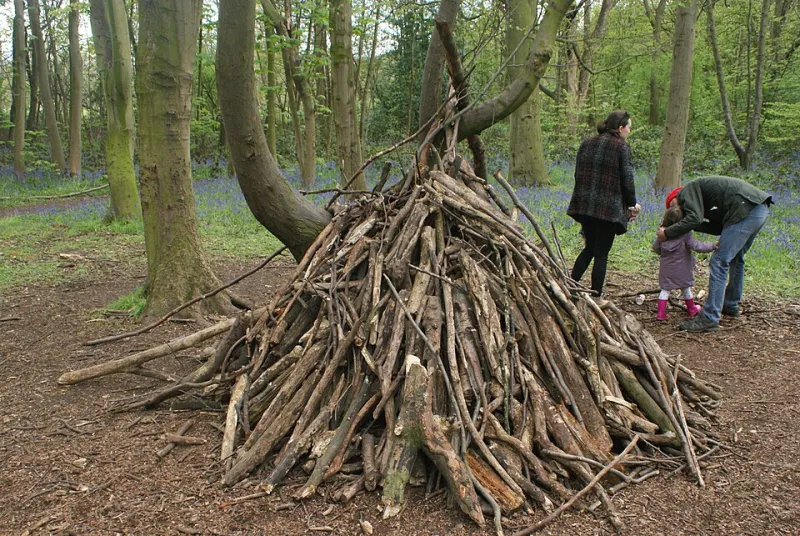
Photo: Robert Lamb , CC BY-SA 2.0, via Wikimedia Commons
Every second Friday, I hand over ninety minutes of my life to a small, airless room that smells faintly of damp PE socks and low-level regret. The laminated sign on the door says 'Lost Property'. The sign is optimistic. What actually lives in there is a woolly Atlantis: a slowly settling civilisation of unnamed knitwear, single gloves and abandoned water bottles, all composting gently at the bottom of a blue plastic tub.
I am, depending on who you ask, either a saint or a woman who cannot say no to a WhatsApp message from the PTA. Either way, I am now the school's unofficial Uniform Amnesty Mum, and I have thoughts.
The Bin Is, Technically, a Metaphor
I know the brief said it is not a metaphor. I know. And yet. Nothing in British primary education sums up the whole enterprise quite like a tub of cardigans with no owners. It is a monument to optimism: every jumper in there was, at some point, bought by a loving adult who genuinely believed this one would come home. It is also a monument to children, who can remove a cardigan in a corridor and emerge forty minutes later wearing only a polo shirt and a look of mild surprise.
I once pulled out a PE kit with a name written on the label in marker. The name had been aggressively scored out. Beneath it, another name, also scored out. Beneath that, a third name, still faintly legible. That bag has had more owners than my last car.
What Actually Lives in There
A rough census from the most recent amnesty:
- Forty-one unnamed items of knitwear, in three shades of navy and one frankly aspirational cream.
- Nine water bottles, six of which contained something I will describe only as 'weather'.
- A single adult trainer, size 10. Nobody has ever explained this.
- One shin pad, no sock, no partner, no hope.
- Four lunchboxes, one still containing a sandwich now old enough to have opinions.
- A truly astonishing number of odd socks, which suggests a portal somewhere in the Year 4 cloakroom.
And, every single time, at the very bottom: one glove. Always one. Never the pair. I have started to believe the second glove is a myth we tell children.
The Coat Question
Here is the ethical dilemma nobody warns you about. Somewhere in the tub is a coat. It is navy. It is age 7–8. It has no name. Your child needs a coat because your child left theirs on a field, and the field is now night.
So you take it. And then, two weeks later, a small child in the dinner queue looks at your son and says, with the devastating calm of a witness: 'That's my coat.'
Reader, I have been that mother. I have handed back a coat with the words 'we thought it was ours' and a smile that did not reach my eyes. There is no dignified way to do it. My personal rule now is simple: if it has no name and it has been in the tub for three weeks, it goes in the charity bag rather than home with me. The charity bag cannot be accused of anything at the school gate.
The Naming War (A Practical Bit, Because I Am Nothing If Not Useful)
If you only take one thing from this article, take this: a biro on a care label is a prayer, not a system. It fades, it runs, and it means nothing to a washing machine set to 40 degrees.
- Label the label, not the fabric. The inside care label survives everything a jumper can be put through. A name in the neck, written in ink, will be a grey smudge by October.
- Use surname and first initial. There were four Evies in one class last year. Four.
- Label the parts nobody thinks about. Both shoes. The inside of the PE bag. The lid of the water bottle, not the side. The inside of the lunchbox.
- Stick-on name labels work, but only if you actually stick them on. I own three sheets, unopened, in a drawer. Do not be me.
- Give the bag a distinctive tag. A cheap keyring, a scrap of ribbon, a dinosaur. Anything that makes it recognisable from four feet away in a scrum of identical blue book bags.
- Photograph your child on day one. Full uniform, front and back. It sounds unhinged. It has settled more than one dispute.
The Amnesty Rules I Now Live By
We run a three-week cycle. Week one: everything goes on the table outside the office, laid out like a jumble sale with ambitions. Week two: anything left goes back in the tub with a large, cheerful poster reminding parents to come and look. Week three: unnamed, unclaimed and unloved items go to the charity shop or the school's spare-spares rail, which is where a child with a sudden nosebleed gets a fresh jumper at 10am without anyone having to ring a parent at work.
It is not glamorous work. It is not even slightly glamorous. My hands smell of fabric softener and other people's pockets. I have found a conker, a chess piece, three pence in copper and, memorably, a small plastic dinosaur which I now keep on my windowsill because nobody claimed him and he seemed nice.
Why I Keep Doing It
Because the alternative is that a child spends a break time shivering on the field in a polo shirt while forty-one cardigans sit in a tub two corridors away, and because the K有必要 factor — no. Let me start again.
Because a lost cardigan is never really about the cardigan. It is about the fact that mornings are chaos, that nobody has time to check a peg at 8:40, and that we are all, every one of us, operating at the outer edge of our organisational ability. The bin is full of small failures of admin. I have made every single one of them.
So if you see me on a Friday in the school office, surrounded by navy wool and looking mildly defeated, do say hello. And if you spot a cream cardigan with a dinosaur tag on the inside label, could you hand it in? It has been in there since September, and I have started to feel sorry for it.
The bin is not a metaphor. But it is a bit of a mirror.