Tea Towels, Tears and Typecasting: Surviving the Primary School Nativity Letter
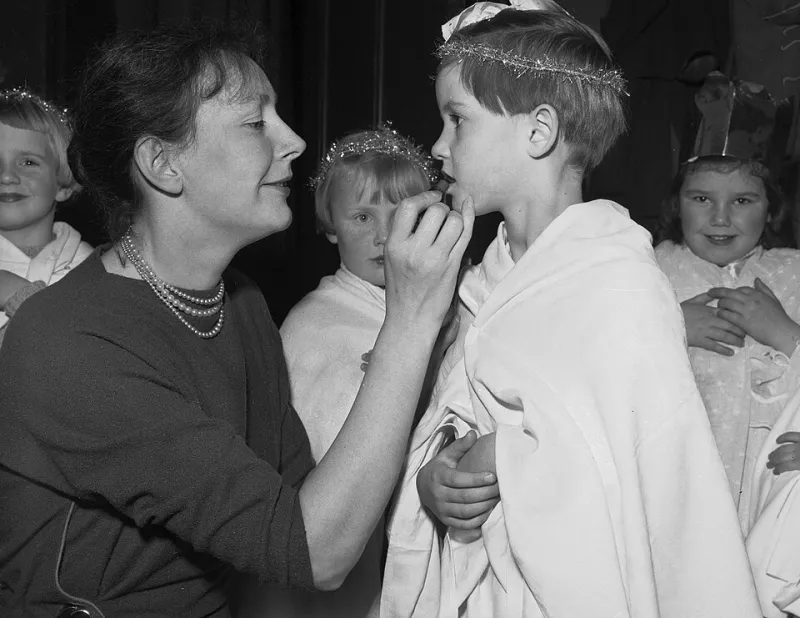
Photo: Geoff Charles, CC BY-SA 4.0, via Wikimedia Commons
November has a lot to answer for. The clocks have gone back, the supermarket is playing festive songs before the Halloween pumpkins have properly composted, and a small rectangle of paper has appeared in your child’s book bag with the words 'nativity casting' printed in Comic Sans. You read it twice, feel a small surge of adrenaline, and wonder whether it is socially acceptable to email the teacher with a list of your child’s strengths. It is not. But we have all thought about it.
The letter lands
The primary school nativity is one of those British institutions that looks charming from the outside and feels like a low-budget reality show from the inside. There are auditions, or not-auditions, depending on the school’s approach. There are costume requests. There are children who have been practising a solo in the shower since October and children who would rather eat a sprout than stand on a stage. And somewhere in the middle there is you: holding a cup of tea, trying to work out whether 'camel' is a promotion or a punishment.
Welcome to nativity casting season. Here is a field guide to the emotional weather.
Stage one: the grand announcement
Your child comes home and announces, with the confidence of someone who has never been booed off stage, that they are going to be the star. Not a star. The star. The one at the top. You nod, say 'that sounds lovely', and quietly check the letter. The letter says 'all children will be given a role'. This is teacher-speak for 'please do not start a campaign'. You know this. Your child does not.
This is the week when every five-year-old in Britain believes they are one headshot away from the West End. It is also the week when you must practise your neutral face. The neutral face is essential. It says, 'I am delighted for you and also completely uninterested in the casting hierarchy', while your brain quietly calculates how many cotton wool balls are left in the cupboard.
Stage two: casting day
On casting day, you pick them up from school and scan their face before they have even reached the gate. There are three possible expressions: barely contained triumph, suspicious neutrality, or the look of a Victorian orphan who has just been told the workhouse is full.
If they are a star, you must act normal. If they are a sheep, you must act normal. If they are a donkey, you must act normal and also buy hay. The trick is not to say 'but you would be such a good star'. They do not want to be a good star. They want to be the star. There is a difference, and it is roughly the size of a primary school hall.
A good script for the car journey home is: 'That sounds like a brilliant role. I cannot wait to see what you do with it.' Then change the subject to something safe, like what they had for lunch. Do not ask who got Mary. Do not ask who got Joseph. And absolutely do not ask whether the donkey has any lines.
Stage three: the tyre-kicking phase
Over the next few days, the role settles in. Your child may swing between acceptance and outrage. You will hear phrases like 'I did not even want to be Mary anyway' and 'the donkey gets more laughs than the angel'. You may find yourself googling 'how to boost child confidence after nativity casting'. You may also find yourself in the supermarket, staring at a packet of cotton wool balls and wondering how your life got here.
This is normal. Nativity casting is a child’s first brush with typecasting, and it stings. One year they are the angel. The next year they are a sheep. The year after that they are a camel with a suspiciously large hump. It is not a reflection of their potential. It is a reflection of how many tea towels the school has in the cupboard.
Stage four: costume negotiations
Every nativity letter contains the same sentence: 'We would be grateful if parents could provide a simple costume.' Simple. This is the same word used for a three-tier cake on Bake Off. Your school may request a brown top and dark trousers for a donkey, a white top and tights for an angel, or a shepherd’s outfit. Within minutes, the class group chat is full of questions. Does a Batman dressing gown count as a shepherd? Is a tea towel with a red stripe acceptable? Can a child wear trainers if they are a sheep?
The answer, in most cases, is yes. The golden rule of nativity costumes is that the child’s comfort beats historical accuracy. A camel with a runny nose does not need a hump made of papier-mâché. A star with itchy tinsel will not shine. A shepherd in a tea towel and a dressing gown will look exactly like every other shepherd in the history of primary school nativity, and that is the point.
Label everything. Send spare socks. Do not promise a homemade headpiece unless you have actually made it. And if you are asked to provide 'a small prop', remember that a small prop can be a wooden spoon. It does not have to be a fully functioning manger.
Stage five: performance week
The day of the actual performance arrives. You sit in a plastic chair in the school hall, surrounded by other parents pretending not to cry at 'Away in a Manger'. Your child files in. They are third from the left. They are a sheep. They are also, inexplicably, wearing a headband with ears and a look of pure concentration.
There will be a child who cries. It might be yours. It might be the shepherd. It might be the child playing the innkeeper who has just been told there is no room at the inn and has taken it personally. Someone will forget their line. Someone will wave at their mum. Someone will try to eat part of the set. The angel’s halo will fall off. The star will need the loo.
And then, for about ninety seconds, it will be genuinely lovely. The children will sing. The parents will sniff. The reception teacher will mouth the words from the side of the hall. You will forget about the costume stress and the casting politics and the fact that you have cotton wool stuck to your sleeve. You will just be a mum in a plastic chair, watching your child be part of something.
The bit where we all calm down
Here is the gentle reminder you may need by the end of November: nobody remembers who was Mary in a previous year’s production. Nobody remembers who had the most lines or the best costume. But everybody remembers the year the shepherd cried. Everybody remembers the donkey who waved at his dad. Everybody remembers the star who announced, loudly, that she needed a wee.
That is the thing about the nativity. It is not a talent show. It is a memory-making machine, powered by tea towels and slightly chaotic children. Whether your child is a sheep, a star or a donkey with a questionable hump, they are exactly where they need to be.
And if you are still upset about the casting, take a deep breath, put the kettle on, and remember: next year, they might be the innkeeper. Anything can happen.