The Handbrake Truce: A Survivor’s Map of Primary School Parking Politics
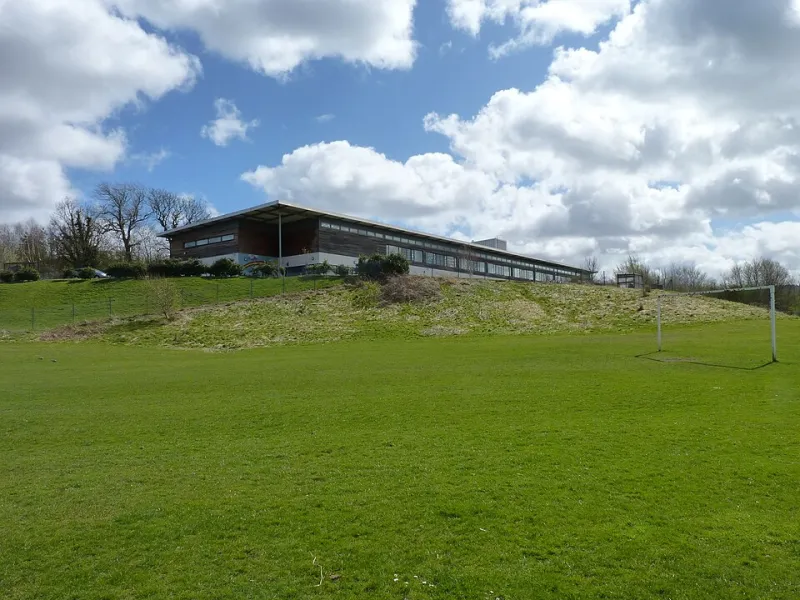
Photo: James Allan , CC BY-SA 2.0, via Wikimedia Commons
It is 3:10pm. You are a reasonable adult with a reusable water bottle and a vague plan for tea. By 3:15pm, you have become a parking strategist with the moral flexibility of a fox near a bin. The school run car park does something strange to ordinarily civil people. We arrive as parents and mutate into competitors in a low-speed motorsport event nobody remembers entering.
This is not really about parking. It is about territory, timing and the deeply British belief that if you indicate confidently enough, the universe will provide a space. The Highway Code has plenty to say about zigzags and crossings. It has almost nothing to say about the mum in the Qashqai who has claimed the same corner since Reception. That is where folklore takes over.
The native species of the school car park
Spend five minutes at pick-up and you will spot the regulars.
- The Hazard-Light Hoverer. Indicator ticking, brake lights glowing, eyes fixed on a space that may or may not be freeing up. They are not parked. They are not moving. They are in a spiritual waiting room between two states of being.
- The Double-Yellow Optimist. Believes yellow lines are more of a suggestion, especially when running late. Their internal monologue is always the same: I am only going to be two minutes. Reader, they are never two minutes.
- The Buggy-Blocking Corner Crew. Parks on the corner because it is convenient for them and mildly apocalyptic for anyone with a pram, a scooter or a toddler who has chosen today to walk at the speed of a tired snail.
- The Formula One Pit Stop Parent. Arrives at speed, releases child and backpack in one fluid motion, and is gone before the door has fully closed. You admire it. You also secretly want to check their tyre pressure.
- The Reverse Archaeologist. Attempts a twelve-point turn while a queue forms, a dog barks and someone’s Year 2 child asks loudly why that car is going backwards again.
None of these people are villains. Most of them are just late, tired or operating on the last square of a Percy Pig packet. But put them all in one small rectangle of tarmac and you have a social experiment with engines.
The unwritten hierarchy and your wing mirror
School-gate parking has a hierarchy, even if nobody will admit it. At the top are the people who arrive at 2:45pm and sit in their cars with a flask and a podcast. They have achieved parking enlightenment. Below them are the parents who know a secret side street and walk the final stretch with the smug glow of someone who has beaten the system. Below that are the rest of us, circling like gulls around a dropped chip.
The real currency is not size of car or length of school career. It is confidence. The parent who indicates early, smiles apologetically and commits to a manoeuvre will usually be forgiven. The parent who stops dead in the middle of the road to have a chat through an open window will be discussed in group chats for weeks. Not unkindly. Just thoroughly.
And yes, your wing mirror is involved. It is the sacrificial offering of the school run. One wrong squeeze past a parked estate car and you are left with a scratch, a sharp intake of breath and a new story for the gate.
Survival tactics for the handbrake truce
Here at Mum-Hood, we are not here to judge. We are here to help everyone get out of the car park without a formal apology or a minor insurance claim.
- Arrive early or accept the long walk. There is no shame in parking three streets away and pretending the brisk walk is intentional cardiovascular exercise.
- Use indicators as communication, not decoration. If you are waiting, make it obvious. If you are leaving, signal. If you are simply having a crisis, maybe pull over first.
- Leave a gap. Not a tiny, hopeful gap that requires everyone to breathe in. A real gap. The kind that lets another human open a door without performing gymnastics.
- Do not block buggies, bins or driveways. The buggy mafia remembers. So do the bin men.
- Wave thank you. A small hand raise can prevent a thousand silent resentments. It is the parking equivalent of offering someone a biscuit.
- Do not hover directly behind someone who is still strapping in a child. This is not a space yet. It is a family in a vulnerable moment, usually involving one lost shoe and a half-eaten cereal bar.
The car park is not a racetrack. It is a shared space with a lot of people who are all trying to do the same ordinary thing: collect a small person and get home before the hangry hour.
Are you the problem? A quick mirror test
Ask yourself a few gentle questions. Have you ever parked on a pavement because everyone else had? Have you ever mouthed something uncharitable through a windscreen? Have you ever reversed into a space while pretending not to see the person who was clearly waiting first?
If you answered yes to any of these, congratulations: you are part of the ecosystem. The good news is that ecosystems can be improved. The bad news is that it starts with you, and it probably starts with parking slightly further away and walking.
The case for a 3:15 ceasefire
Nobody’s child is safer because we shaved forty seconds off the walk. Nobody’s tea tastes better because we beat the Volvo to the corner. The school run is chaotic enough without turning the last fifty metres into a low-budget action film.
So tomorrow, take a breath at 3:10pm. Park a street away. Say hello to the person you usually only see through a windscreen. Let the hoverer have the space. You might arrive with your wing mirrors, your friendships and your blood pressure intact. And if not, at least you can tell everyone at the gate that you tried.